
harold stabler A Rare Art Deco Streling silver four piece teaset on baelite tray
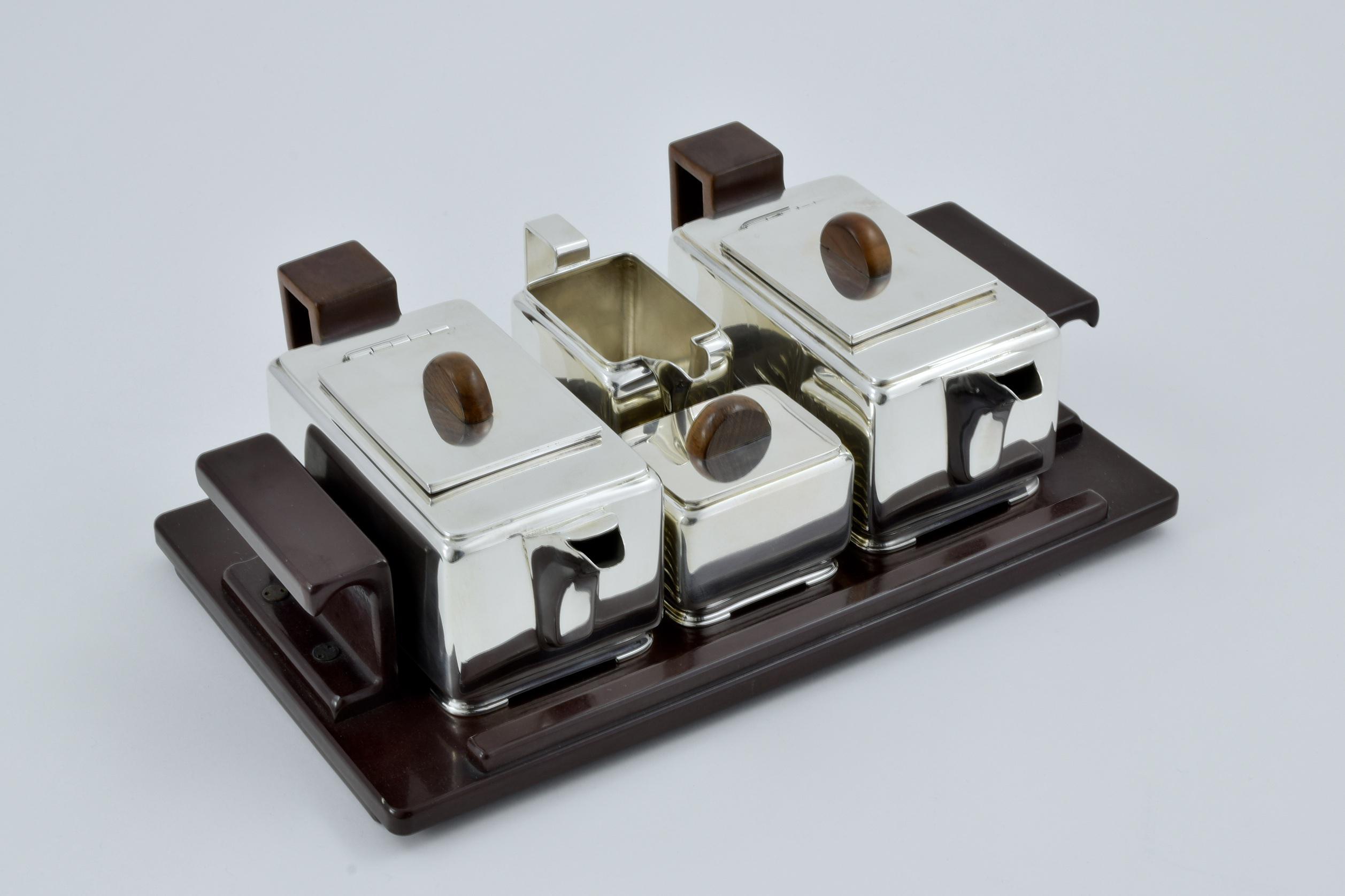
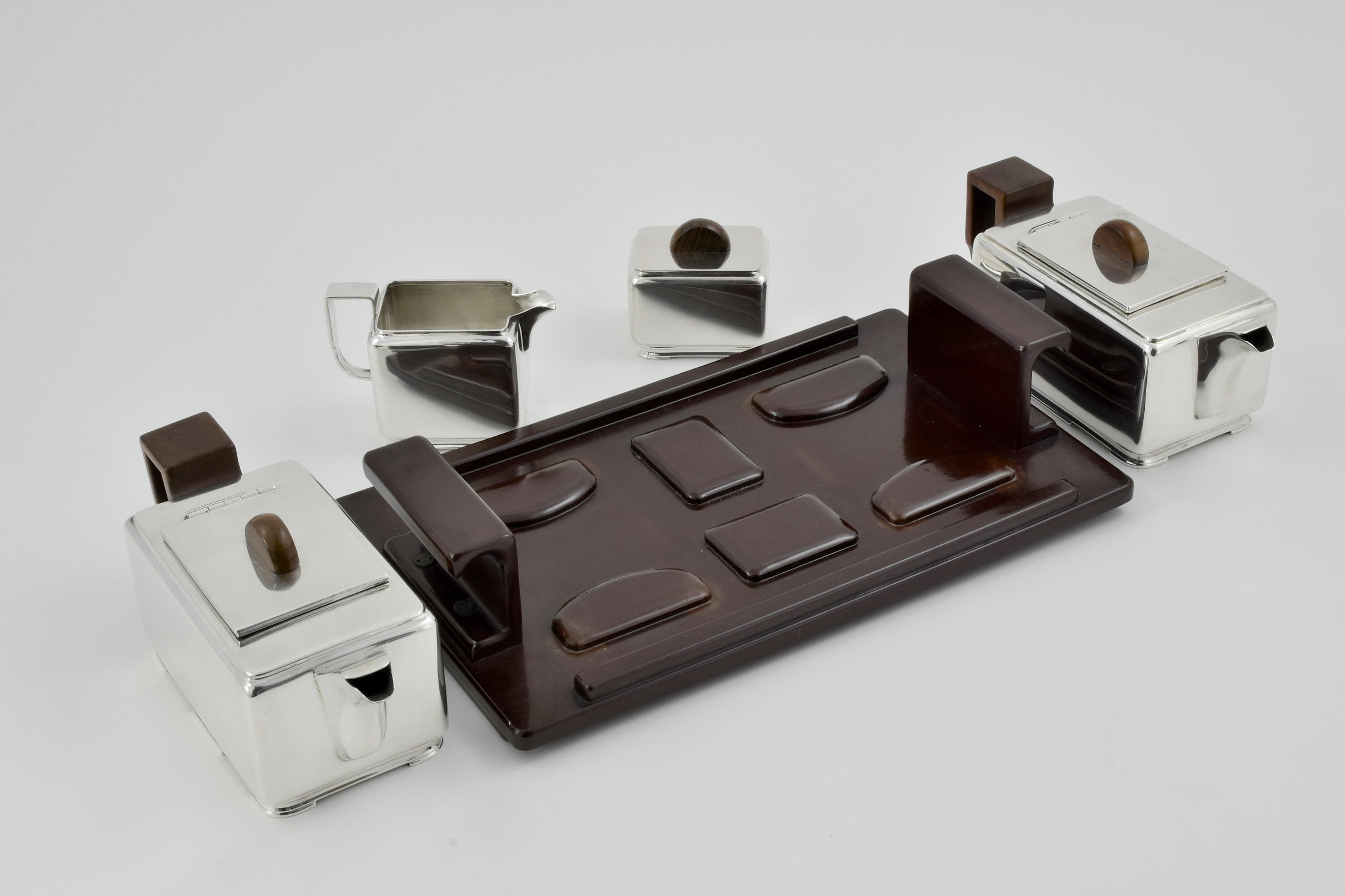
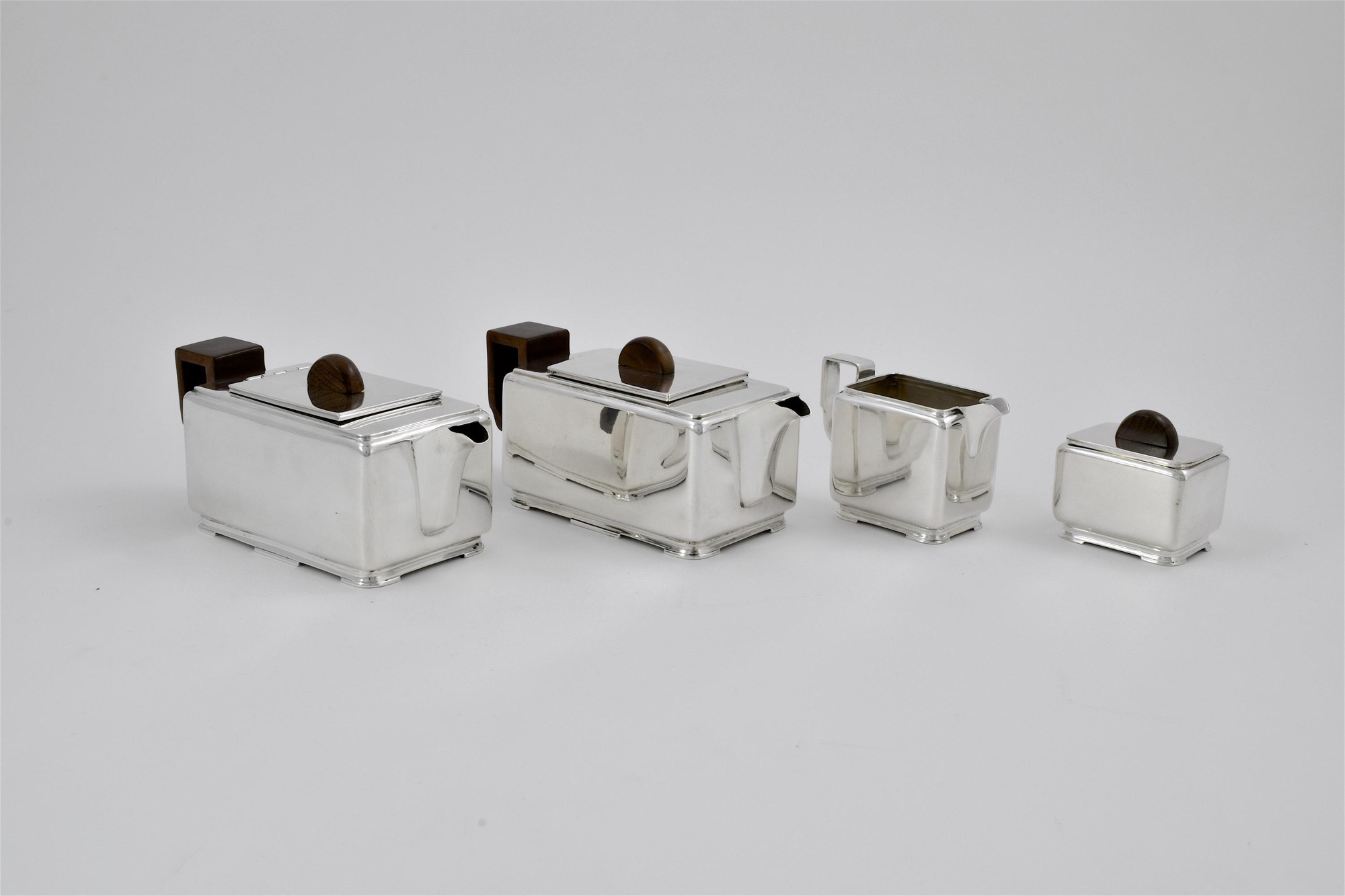
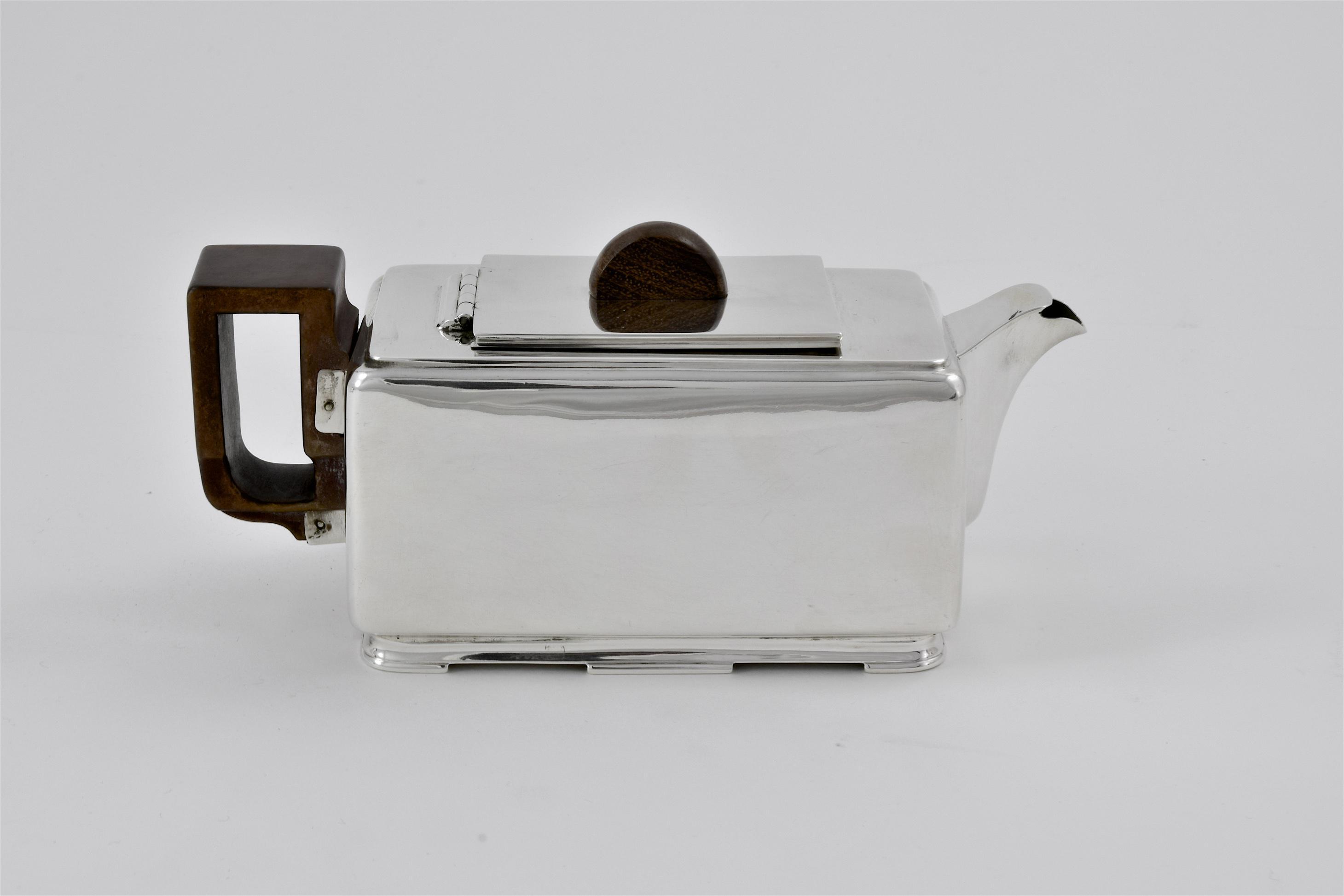
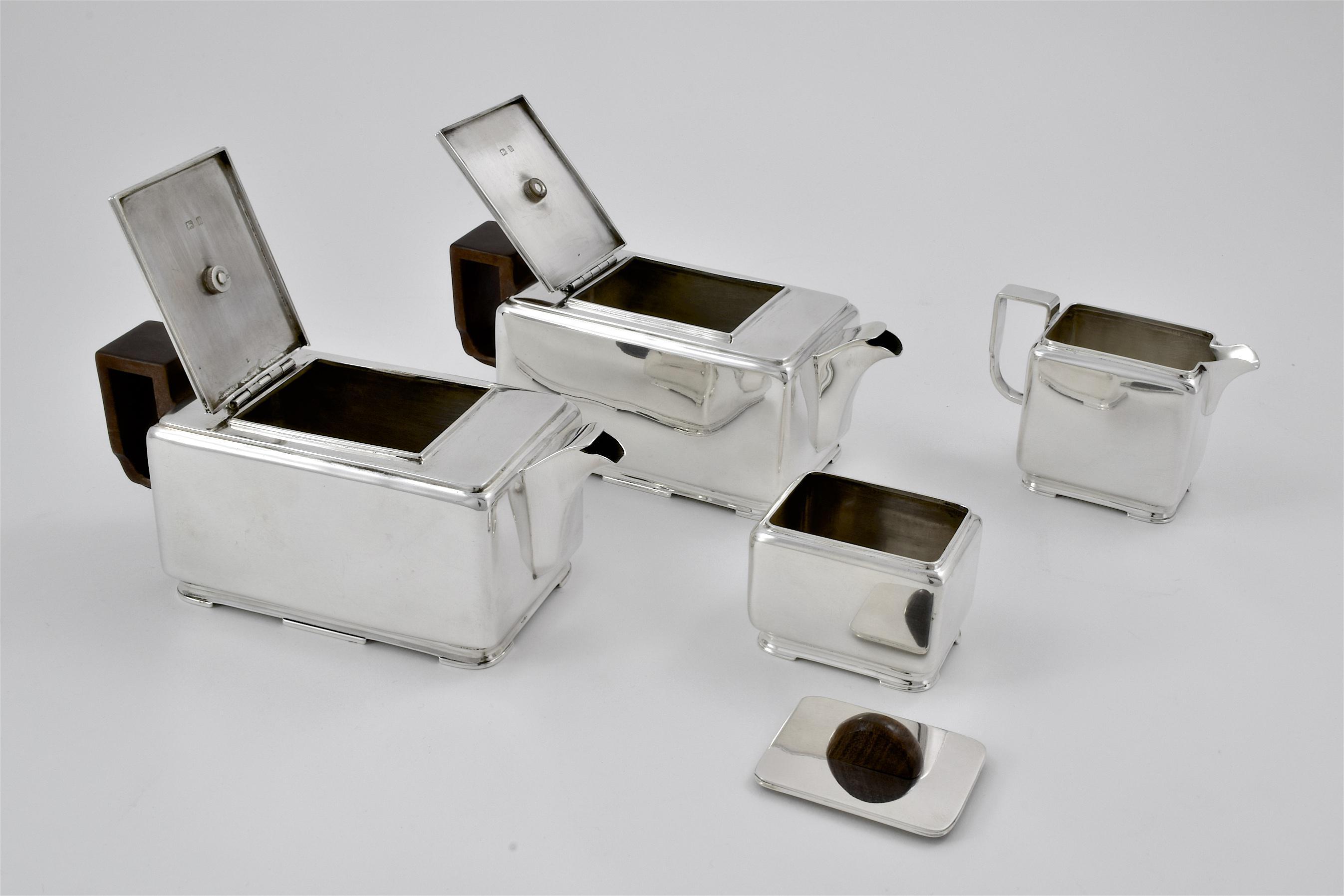
harold stabler A Rare Art Deco Streling silver four piece teaset on baelite tray
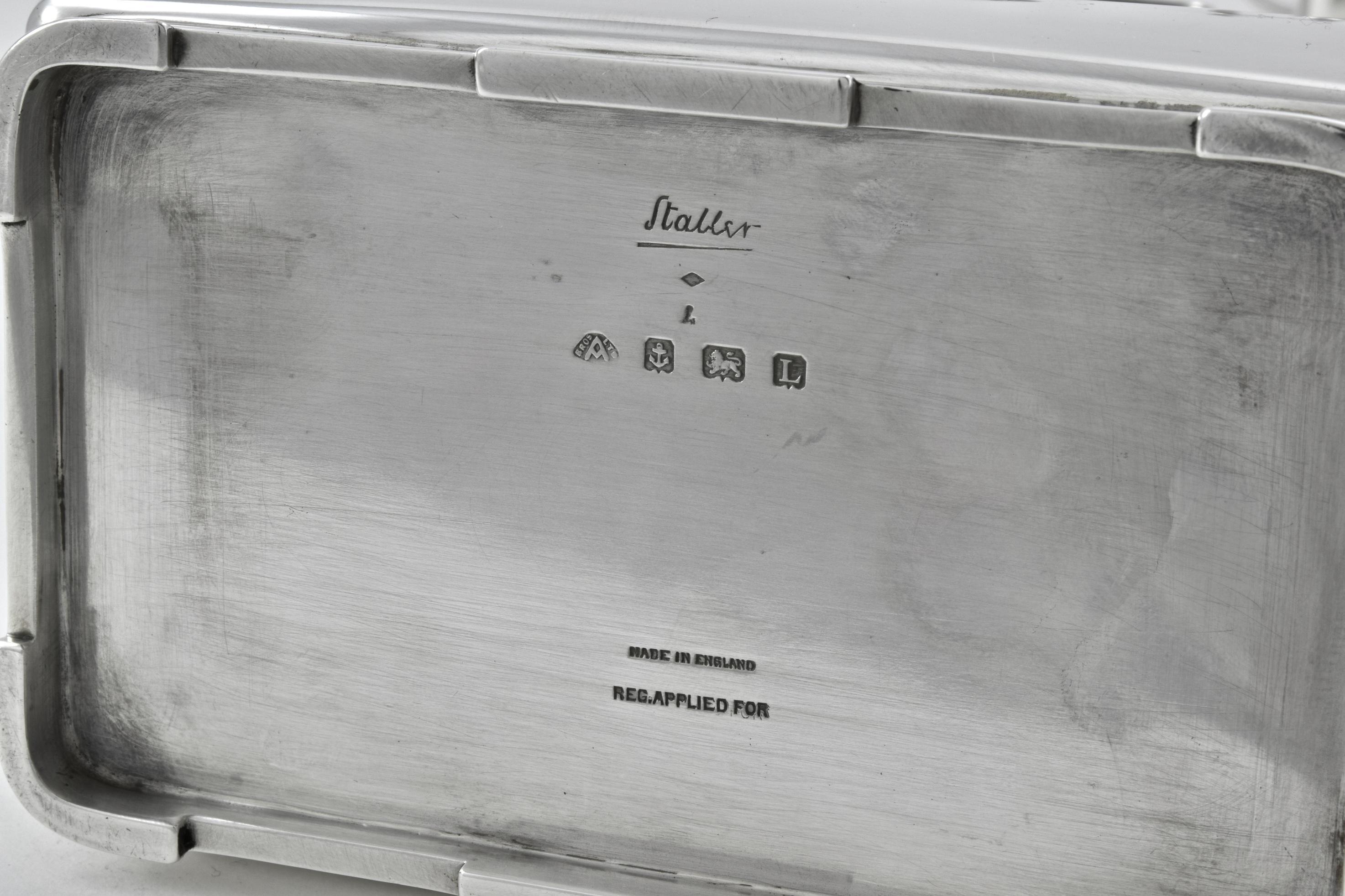
Hallmarked for Adie Brothers, Birmingham 1935.
Also signed for the designer Harold Stabler
Comprising two silver teapots, a silver cream jug, a silver sugar bowl. and a fitted Bakelite tray
Harold Stabler (1872-1945): Silversmith, Designer and Pioneer of Modern British Industrial Art
Harold Stabler was one of the most influential British silversmiths and designers of the early twentieth century, a figure who successfully bridged the ideals of the Arts and Crafts movement with the emerging principles of modern industrial design. Born
...
Hallmarked for Adie Brothers, Birmingham 1935.
Also signed for the designer Harold Stabler
Comprising two silver teapots, a silver cream jug, a silver sugar bowl. and a fitted Bakelite tray
Harold Stabler (1872-1945): Silversmith, Designer and Pioneer of Modern British Industrial Art
Harold Stabler was one of the most influential British silversmiths and designers of the early twentieth century, a figure who successfully bridged the ideals of the Arts and Crafts movement with the emerging principles of modern industrial design. Born
in Levens, Westmorland (now Cumbria), on 10 June 1872, he trained initially as a woodcarver before studying at Liverpool University's art department.
In the 1890s Stabler became associated with the Arts and Crafts movement, settling in Hammersmith, a centre of activity for followers of William Morris. He served as manager of the Keswick School of Industrial Art and later became Head of the Art Department at the Sir John Cass Institute in London, a position he held for three decades. He also taught at the Royal College of Art, influencing a generation of designers and craftsmen.
Stabler first achieved recognition as an enameller and silversmith. His silverwork combined technical mastery with imaginative decoration, often incorporating brightly coloured enamels and naturalistic motifs. Contemporary critics praised the vitality and originality of his designs, which ranged from jewellery and domestic silver to ceremonial objects. Among his notable commissions were a silver-and-enamel mace for Westminster Cathedral, the ceremonial collar of the Royal Victorian Order, and work for the Goldsmiths' Company. He regularly exhibited with the Arts and Crafts Exhibition Society and at the Royal Academy.
What distinguished Stabler from many Arts and Crafts contemporaries was his willingness to embrace industrial production. After visiting the influential Deutscher Werkbund exhibition in Germany in 1914, he became convinced that good design should reach a wider public through modern manufacturing methods. He was a founding member of the Design and Industries Association (DIA), established in 1915 to promote cooperation between designers and industry and to raise standards in British manufacturing.
Throughout the 1920s and 1930s Stabler applied his talents across an unusually broad range of media. He designed silverware, stainless-steel tableware, pottery, glass, jewellery, posters and architectural decoration. His industrial work included designs for Pyrex glass and modern tea services produced by firms such as Adie Brothers and Firth Vickers. The "Cumberland" stainless-steel tea set, introduced in the late 1930s, remained in production for many years and exemplified his belief that elegant design should be accessible through mass production.
Stabler also left a lasting mark on London's visual environment. He designed decorative ceramic tile panels for London Underground stations, depicting counties, landmarks and historical themes associated with the capital and its surrounding regions. These works demonstrated his ability to combine craftsmanship, public art and modern transport design.
His creative life was closely linked to that of his wife, the sculptor and ceramic artist Phoebe Stabler, whom he married in 1906. The couple collaborated on numerous projects in metalwork, ceramics and public commissions, including designs for Poole Pottery and memorial works.
In recognition of his achievements, Stabler was named one of the first "Royal Designers for Industry" in 1936 and was elected a Fellow of the Royal Society of Arts. When he died in Hammersmith on 11 April 1945, he was remembered as one of Britain's leading industrial artists and an influential teacher. Today, he is regarded as a key figure in the transition from the handcrafted ideals of the Arts and Crafts movement to the modern design culture of the twentieth century, demonstrating that artistic integrity and industrial production could work together rather than stand in opposition.
12518
Dimensions

: Silversmith, Designer and Pioneer of Modern British Industrial ArtHarold Stabler was one of the most influential British silversmiths and designers of the early twentieth century, a figure who successfully bridged the ideals of the Arts and Crafts movement with the emerging principles of modern industrial design. Born in Levens, Westmorland (now Cumbria), on 10 June 1872, he trained initially as a woodcarver before studying at Liverpool University's art department.In the 1890s Stabler became associated with the Arts and Crafts movement, settling in Hammersmith, a centre of activity for followers of William Morris. He served as manager of the Keswick School of Industrial Art and later became Head of the Art Department at the Sir John Cass Institute in London, a position he held for three decades. He also taught at the Royal College of Art, influencing a generation of designers and craftsmen.Stabler first achieved recognition as an enameller and silversmith. His silverwork combined technical mastery with imaginative decoration, often incorporating brightly coloured enamels and naturalistic motifs. Contemporary critics praised the vitality and originality of his designs, which ranged from jewellery and domestic silver to ceremonial objects. Among his notable commissions were a silver-and-enamel mace for Westminster Cathedral, the ceremonial collar of the Royal Victorian Order, and work for the Goldsmiths' Company. He regularly exhibited with the Arts and Crafts Exhibition Society and at the Royal Academy.What distinguished Stabler from many Arts and Crafts contemporaries was his willingness to embrace industrial production. After visiting the influential Deutscher Werkbund exhibition in Germany in 1914, he became convinced that good design should reach a wider public through modern manufacturing methods. He was a founding member of the Design and Industries Association (DIA), established in 1915 to promote cooperation between designers and industry and to raise standards in British manufacturing.Throughout the 1920s and 1930s Stabler applied his talents across an unusually broad range of media. He designed silverware, stainless-steel tableware, pottery, glass, jewellery, posters and architectural decoration. His industrial work included designs for Pyrex glass and modern tea services produced by firms such as Adie Brothers and Firth Vickers. The "Cumberland" stainless-steel tea set, introduced in the late 1930s, remained in production for many years and exemplified his belief that elegant design should be accessible through mass production.Stabler also left a lasting mark on London's visual environment. He designed decorative ceramic tile panels for London Underground stations, depicting counties, landmarks and historical themes associated with the capital and its surrounding regions. These works demonstrated his ability to combine craftsmanship, public art and modern transport design.His creative life was closely linked to that of his wife, the sculptor and ceramic artist Phoebe Stabler, whom he married in 1906. The couple collaborated on numerous projects in metalwork, ceramics and public commissions, including designs for Poole Pottery and memorial works.In recognition of his achievements, Stabler was named one of the first "Royal Designers for Industry" in 1936 and was elected a Fellow of the Royal Society of Arts. When he died in Hammersmith on 11 April 1945, he was remembered as one of Britain's leading industrial artists and an influential teacher. Today, he is regarded as a key figure in the transition from the handcrafted ideals of the Arts and Crafts movement to the modern design culture of the twentieth century, demonstrating that artistic integrity and industrial production could work together rather than stand in opposition.)