
Paul Storr: An impressive silver-gilt cup and cover
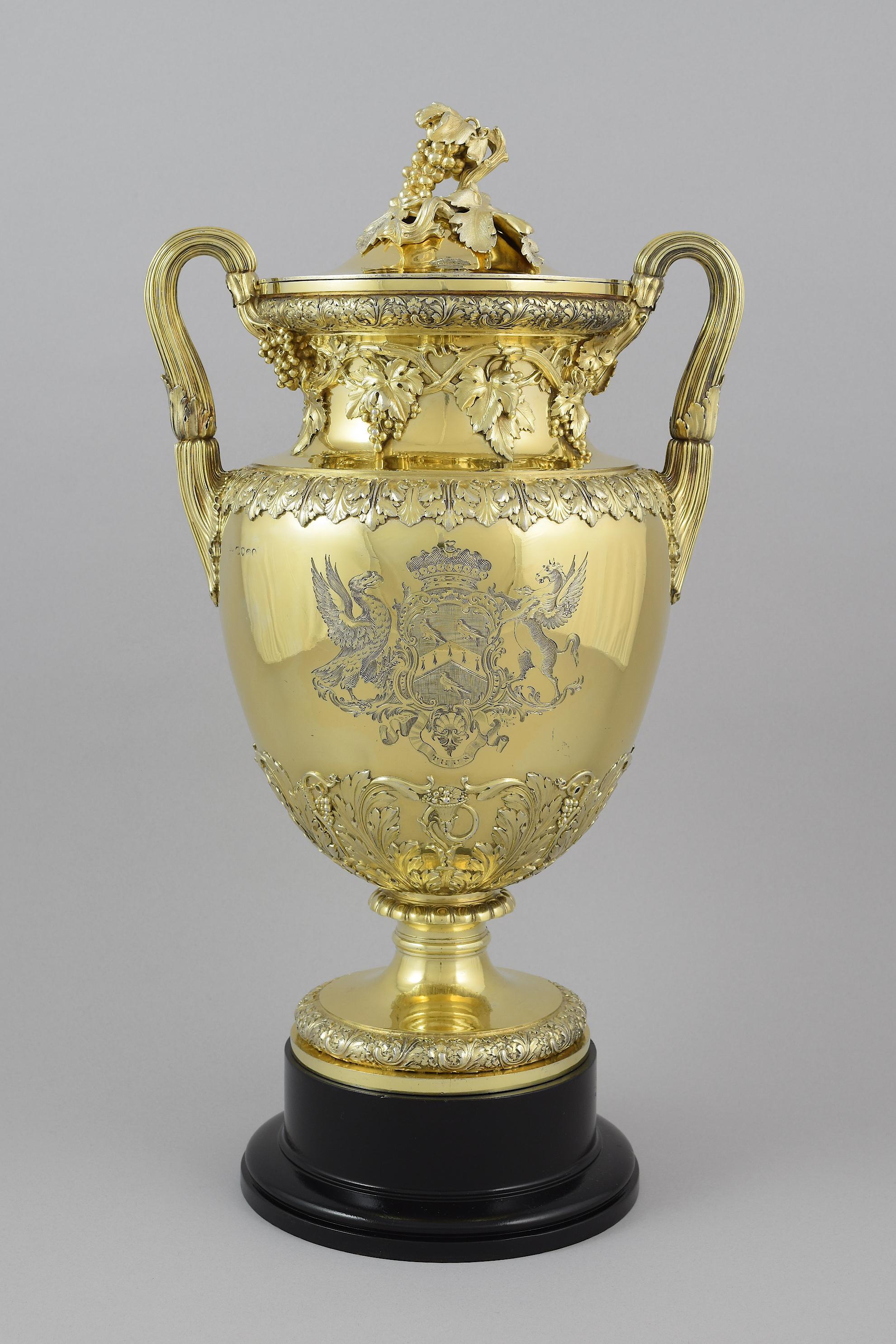
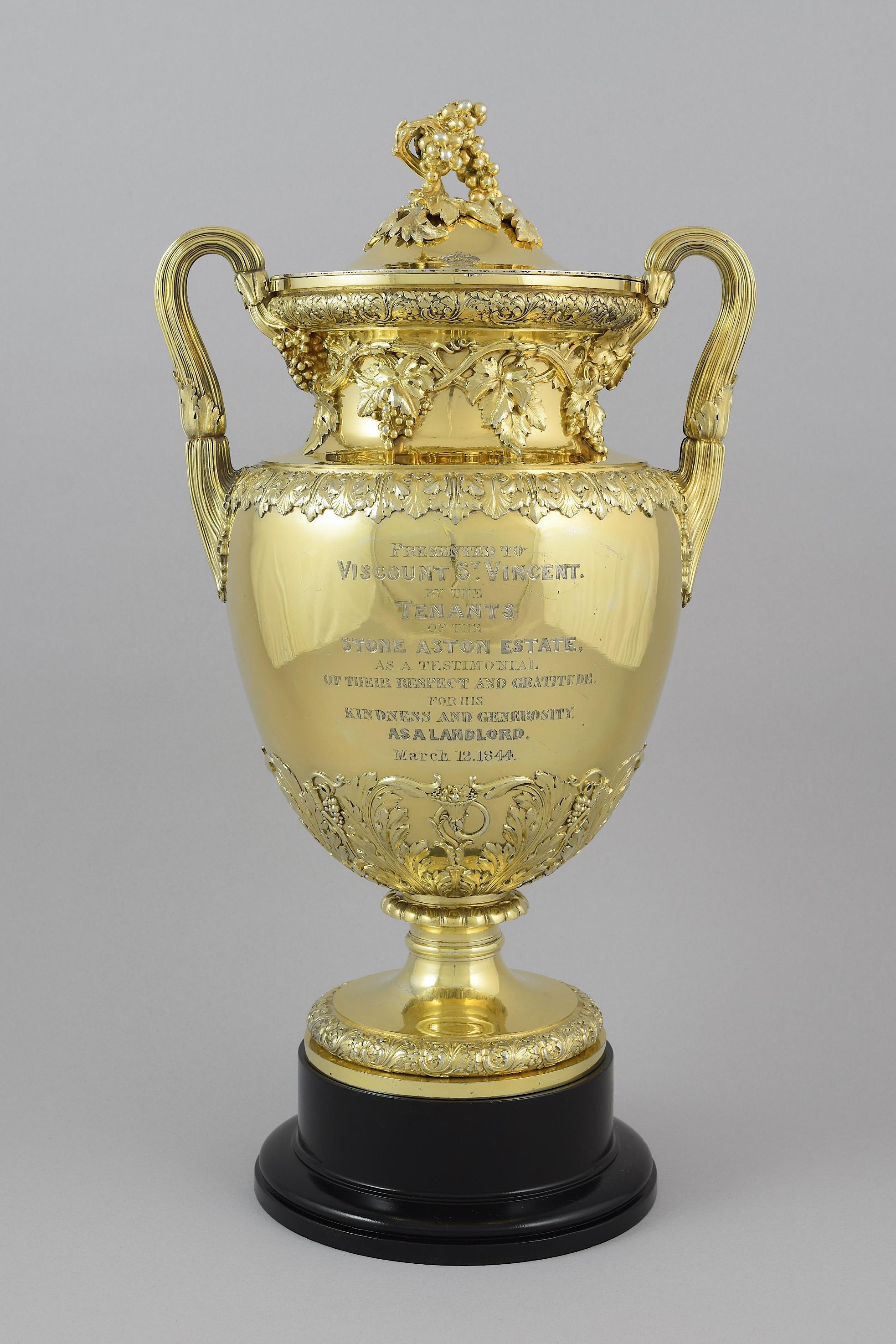
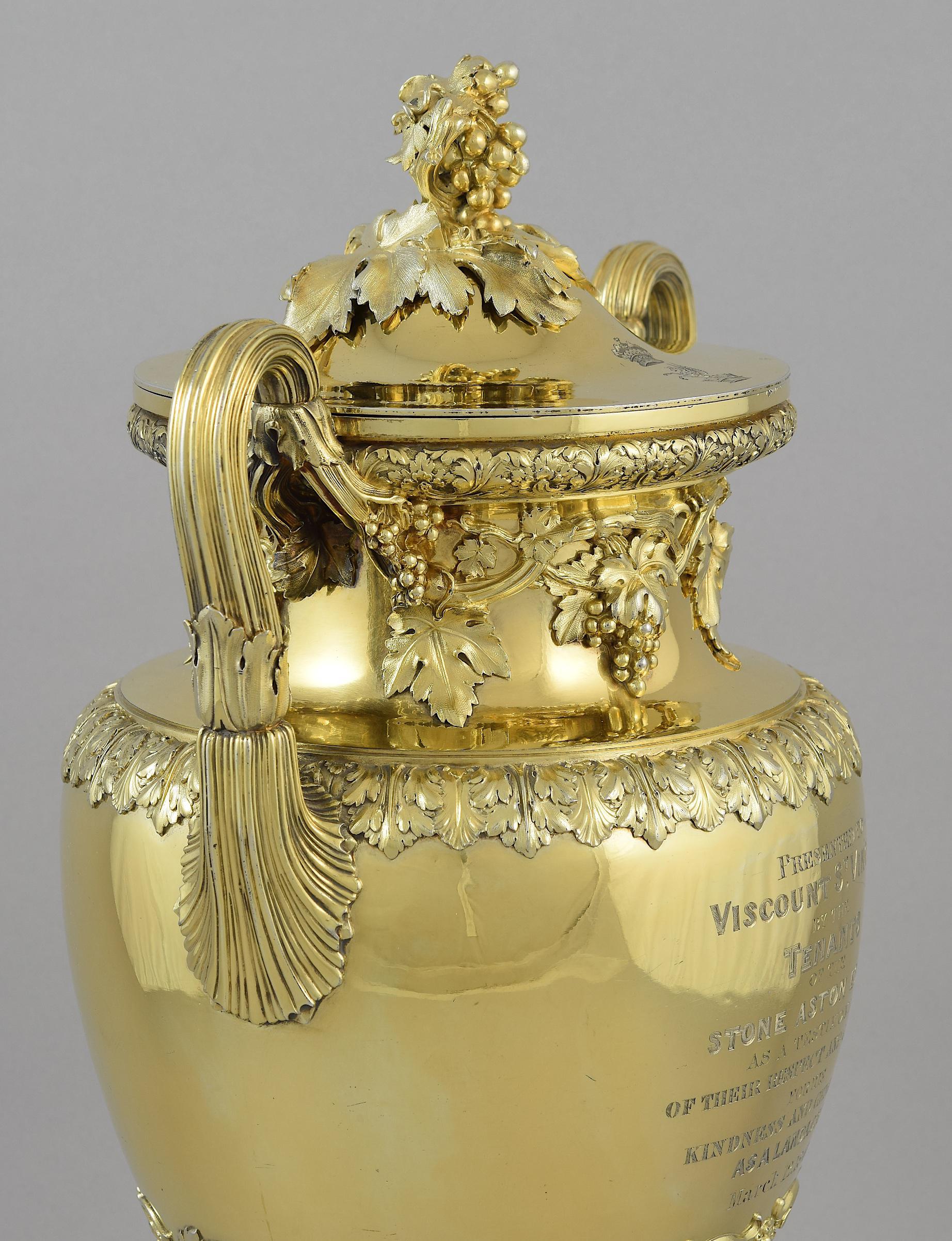
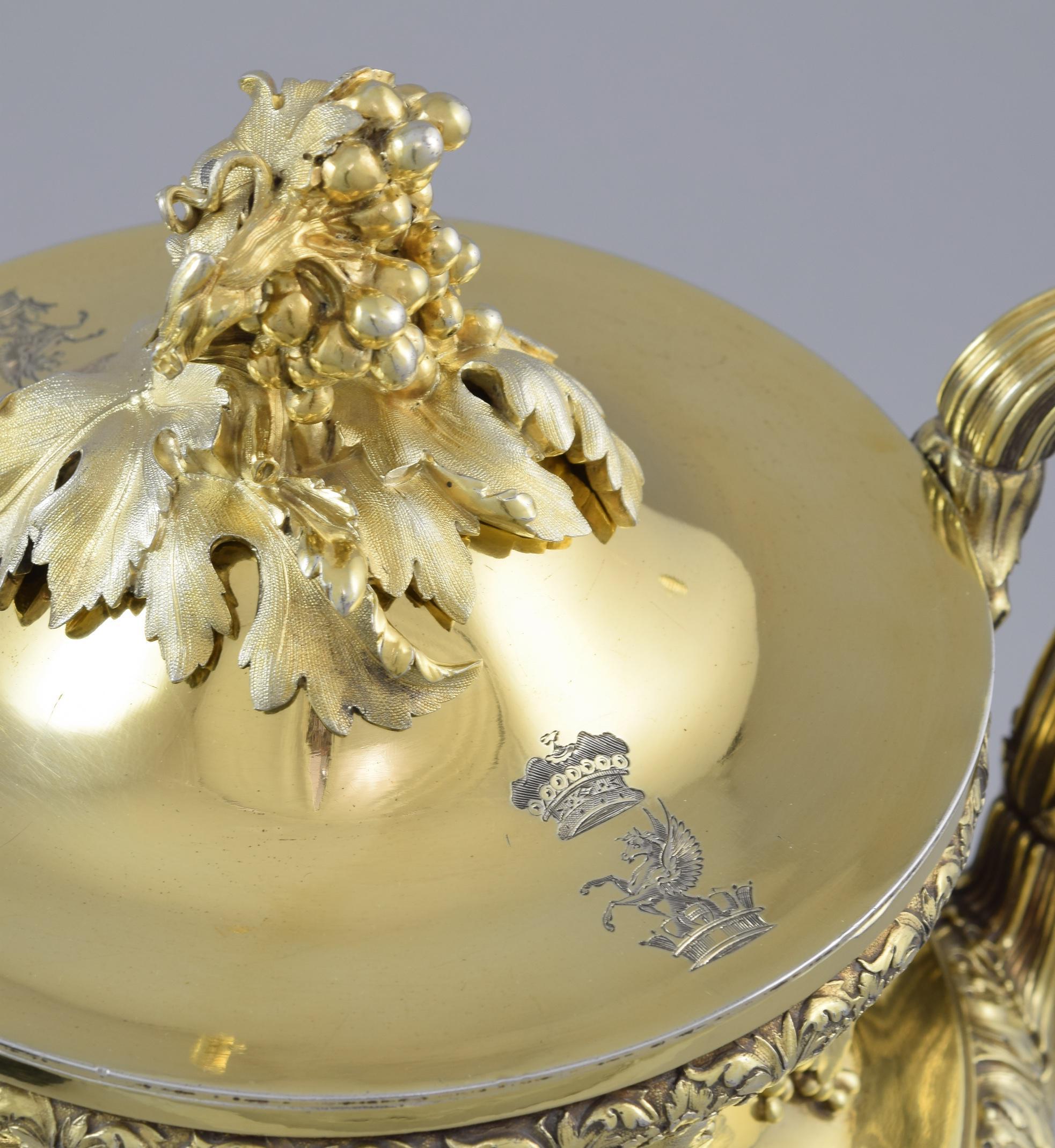
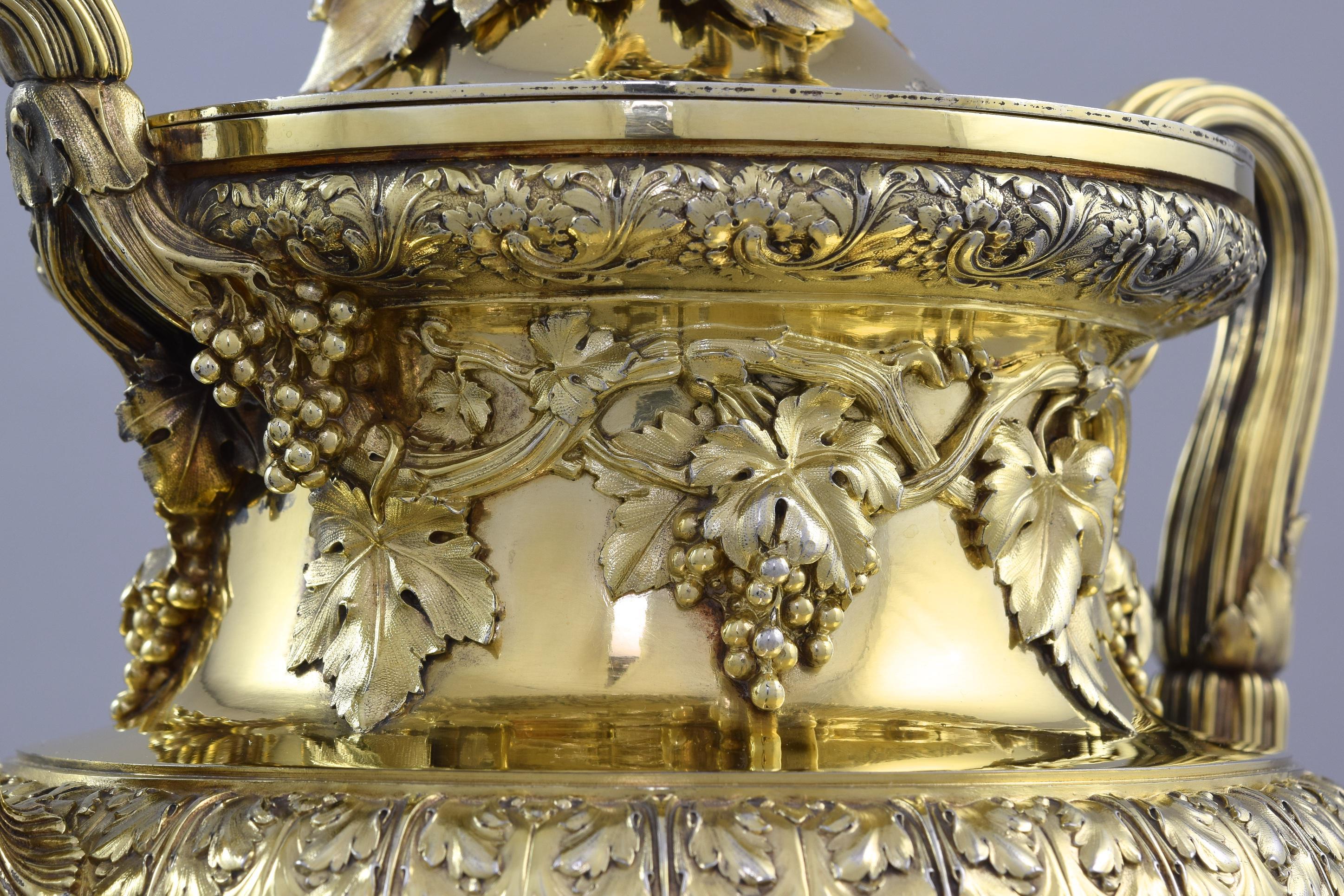
Paul Storr: An impressive silver-gilt cup and cover
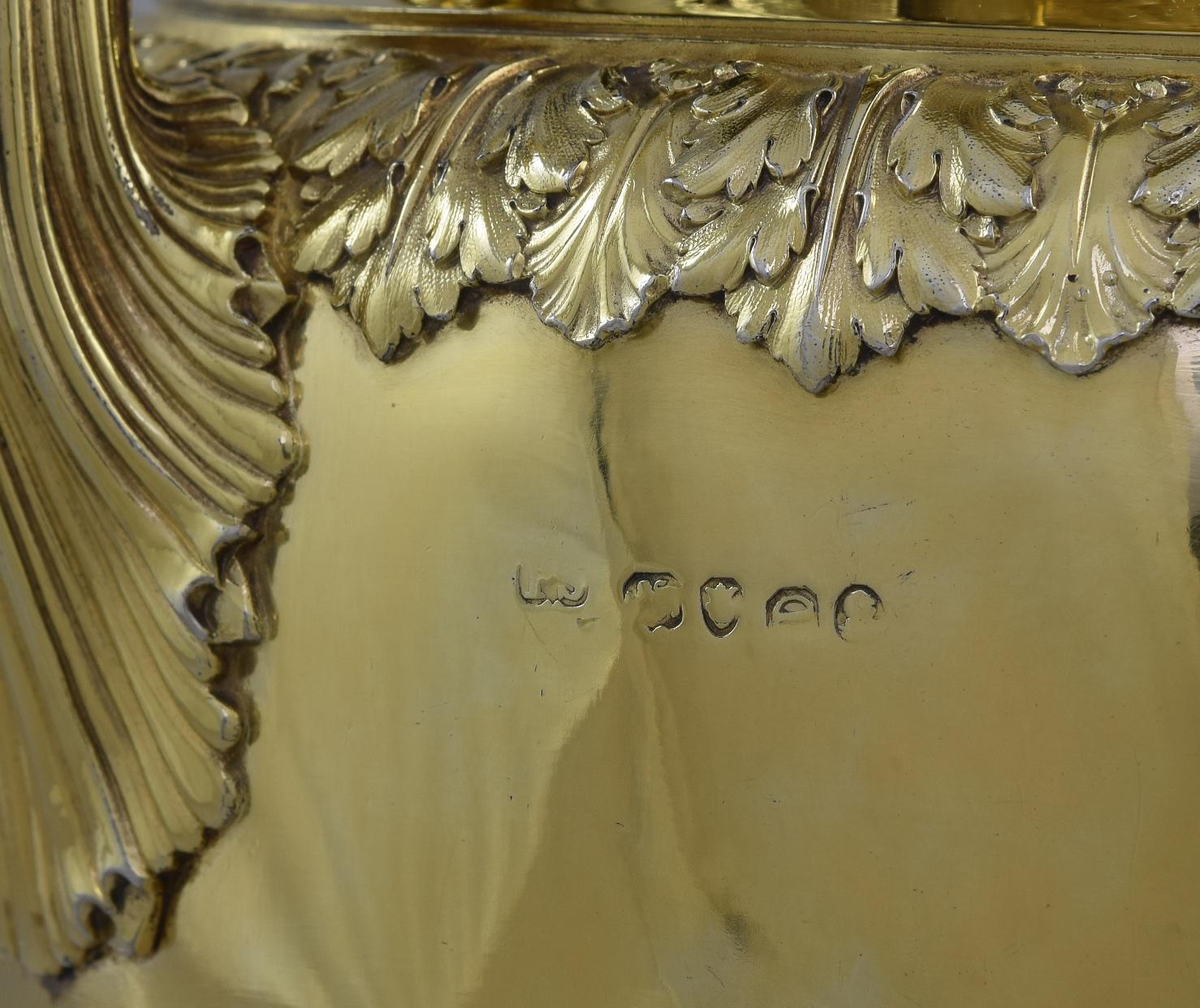
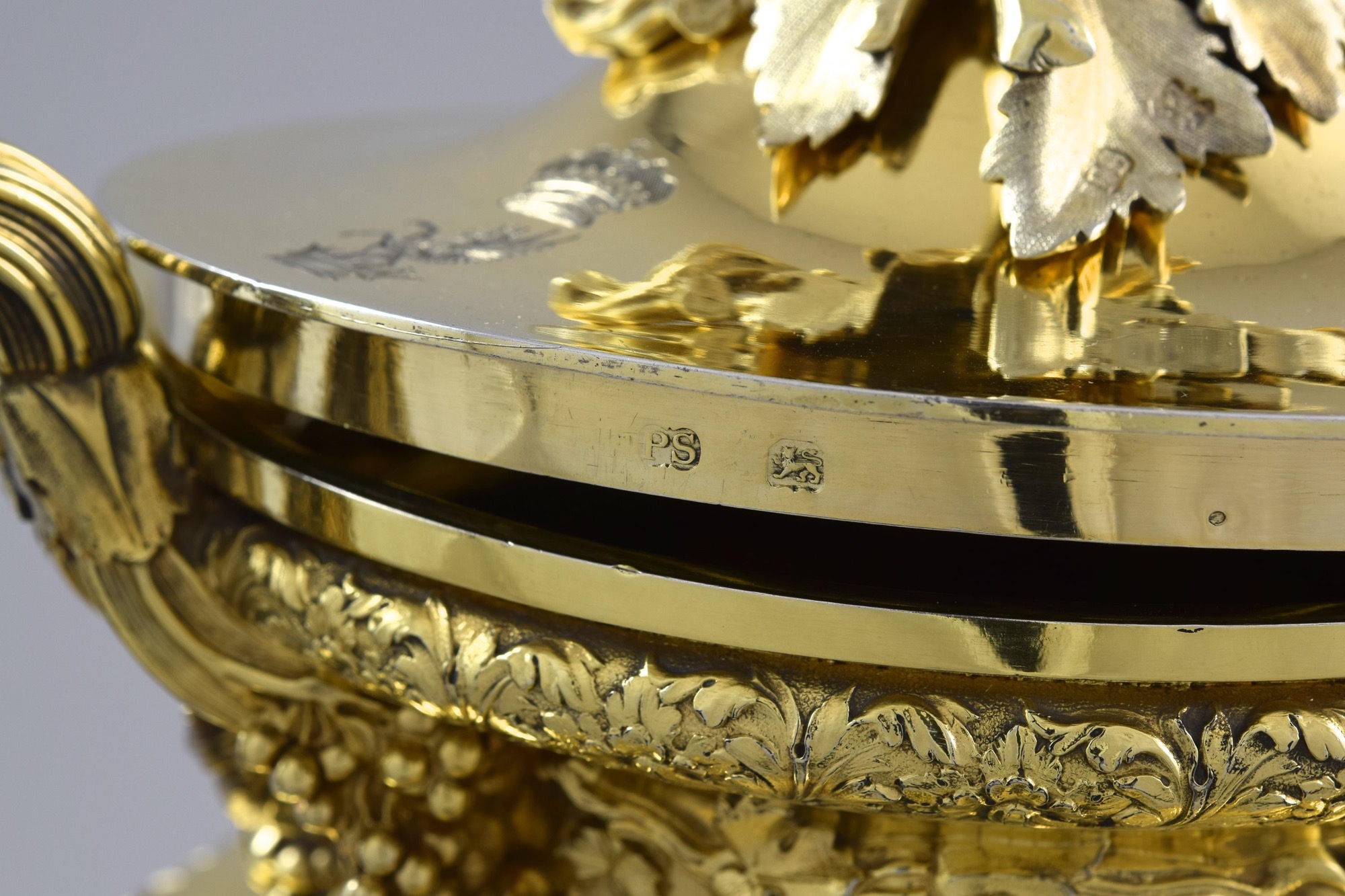
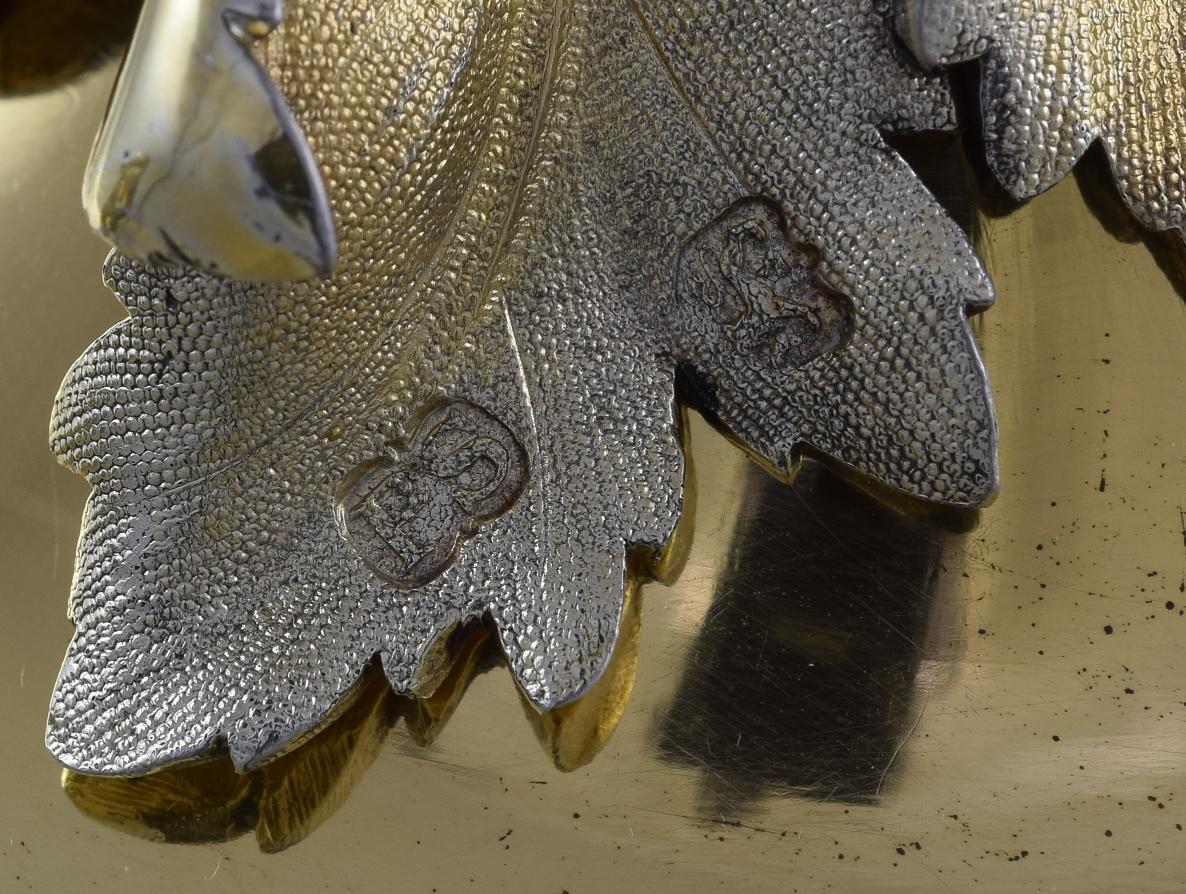
Hallmarks for Paul Storr, London 1820
height including plinth 20 inches (51cm)
Height off plinth 17.5 inches (44.5cm)
10.5 inches (27cm) across the handles
Silver weight: 127 troy oz (3950g)
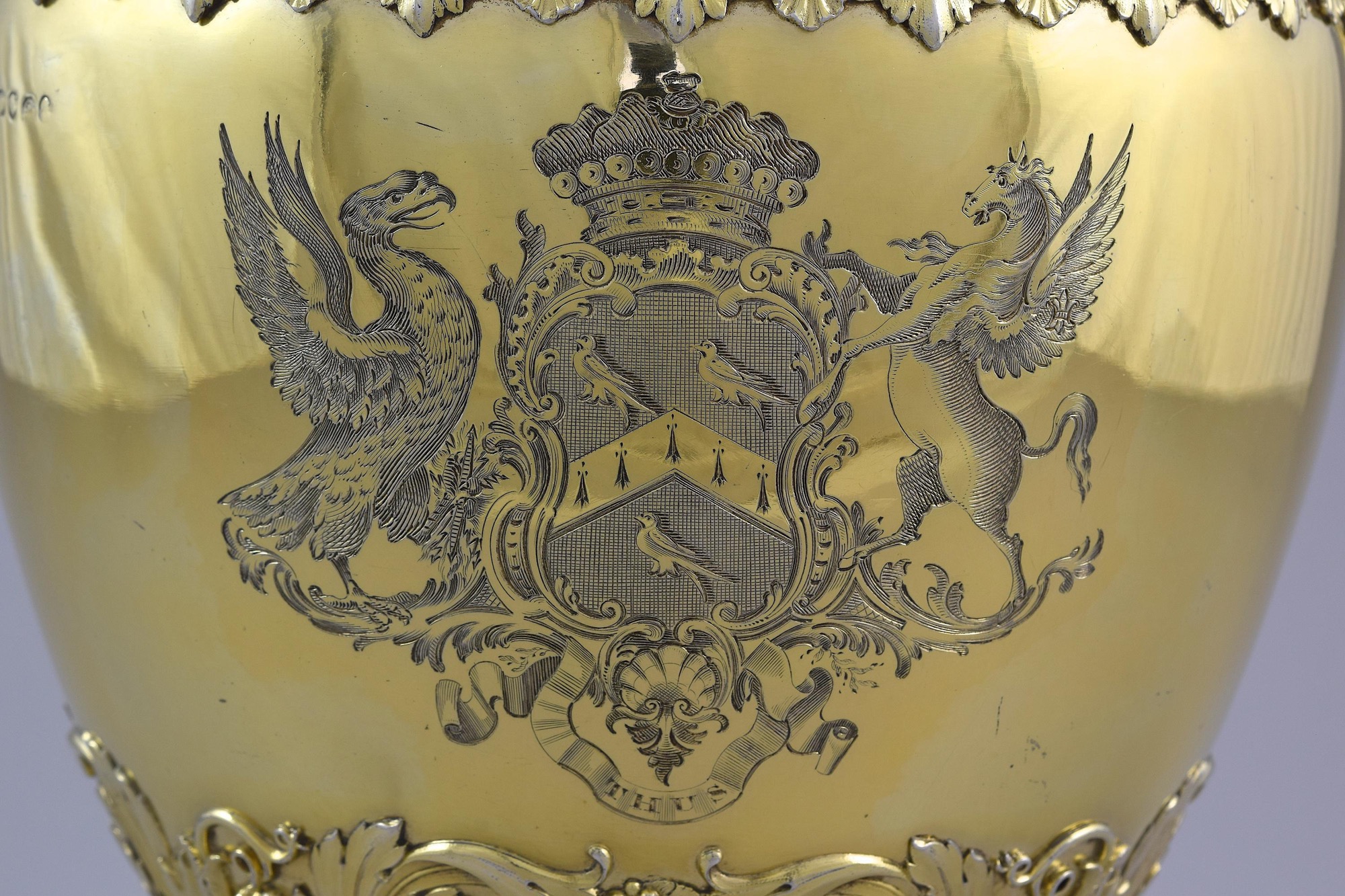
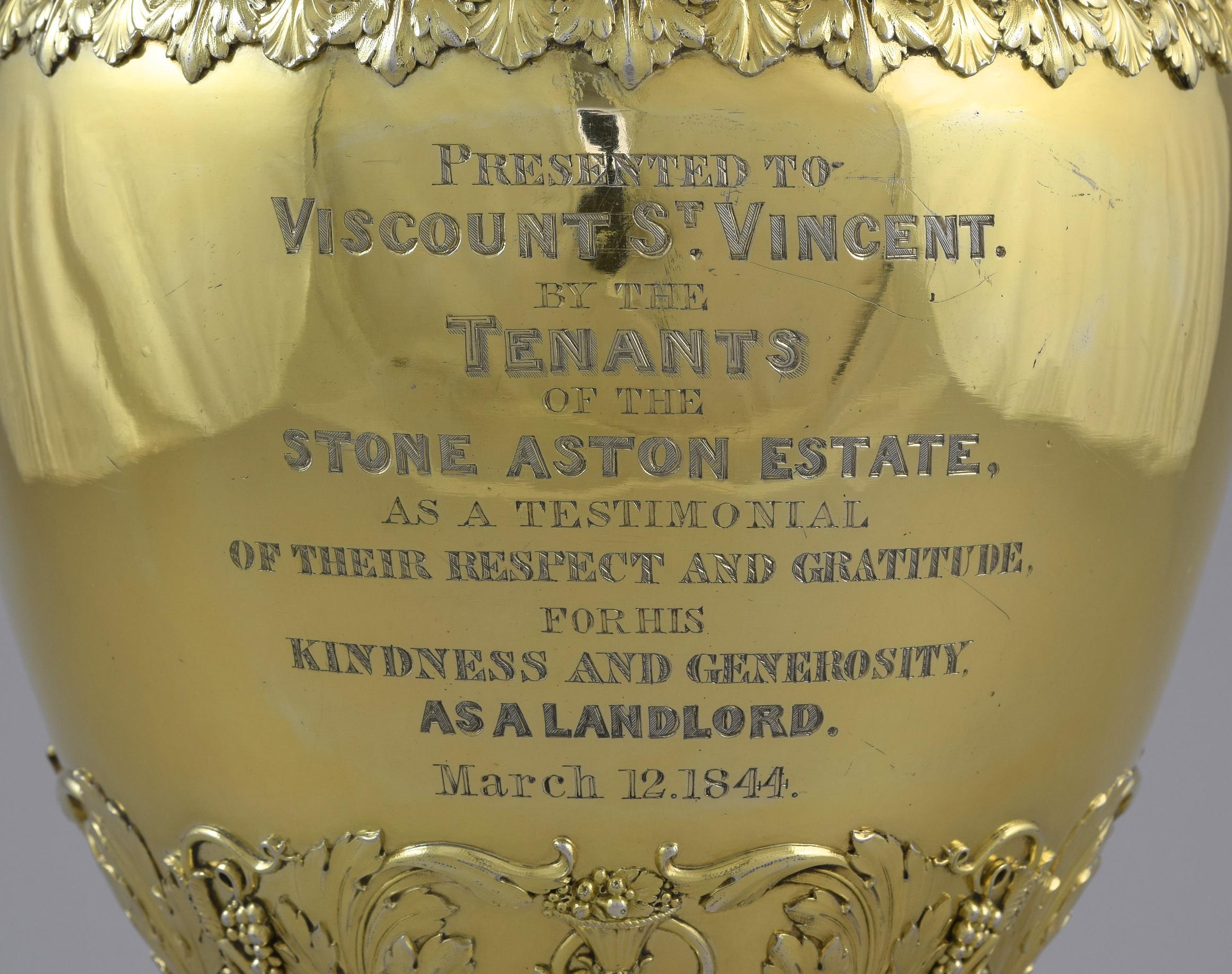
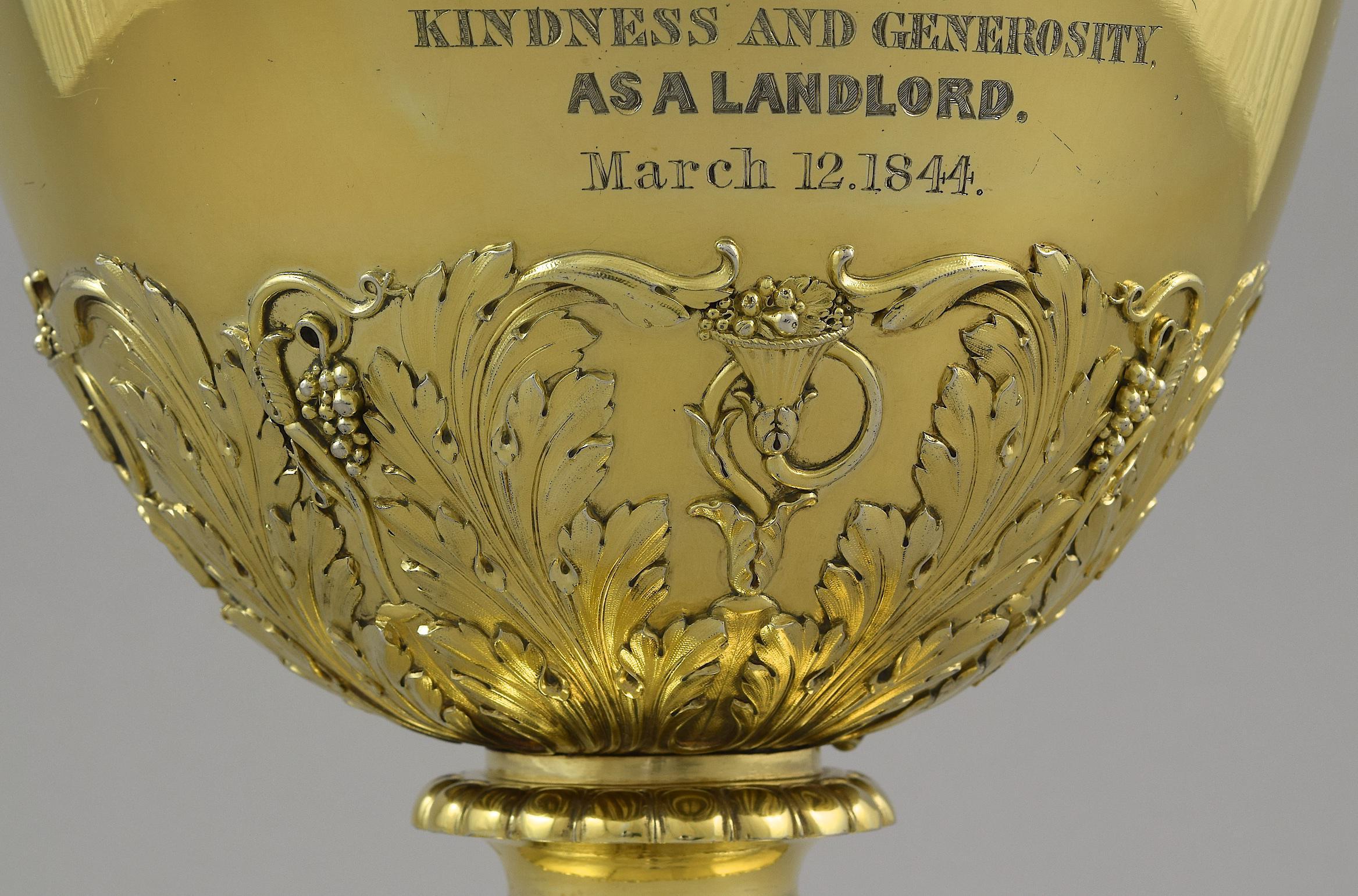
The beautifully engraved coat of arms are for Edward Jervis Ricketts 2nd Viscount St. Vincent (1767-1859). The inscription reads "Presented to Viscount St Vincent by the tenants of the Stone Aston Estate. As A Testimonial Of Their Respect And Gratitude For His Kindness And Generosity As A Landlord March 16, 1844"
Paul Storr was
...
Hallmarks for Paul Storr, London 1820
height including plinth 20 inches (51cm)
Height off plinth 17.5 inches (44.5cm)
10.5 inches (27cm) across the handles
Silver weight: 127 troy oz (3950g)
The beautifully engraved coat of arms are for Edward Jervis Ricketts 2nd Viscount St. Vincent (1767-1859). The inscription reads "Presented to Viscount St Vincent by the tenants of the Stone Aston Estate. As A Testimonial Of Their Respect And Gratitude For His Kindness And Generosity As A Landlord March 16, 1844"
Paul Storr was
the most accomplished Neoclassical silversmith and goldsmith during the Regency period in England in the first half of the nineteenth century. Born in London in 1770, Storr apprenticed in the silver trade before forming a brief partnership with William Frisbee in 1792 in Soho. Storr subsequently began to work on his own and apply a signature PS mark to the various pieces that he made. He created a gold font for the Duke of Portland in 1797 and the ''Battle of the Nile Cup'' for Lord Nelson in 1799. After marrying Elizabeth Beyer in 1801, Storr caught the attention of Philip Rundell of the prestigious silver firm, Rundell, Bridge, and Rundell, in 1803. Storr held out for four years before agreeing to work together. While lucrative, Storr eventually found the partnership uninspiring artistically, so he left to reopen his own shop in 1819. Storr collaborated with John Mortimer in 1822 to launch a retail storefront on New Bond Street. Over time, Storr''s reputation grew and the quality of his craftsmanship was such that he was commissioned to produce silver items for many royal palaces throughout Europe. His work became a personal favourite of both King George III and King George IV. Storr retired to Tooting in 1838 and died there in 1844.
12309
Dimensions

Height off plinth 17.5 inches (44.5cm)10.5 inches (27cm) across the handlesSilver weight: 127 troy oz (3950g)The beautifully engraved coat of arms are for Edward Jervis Ricketts 2nd Viscount St. Vincent (1767-1859). The inscription reads "Presented to Viscount St Vincent by the tenants of the Stone Aston Estate. As A Testimonial Of Their Respect And Gratitude For His Kindness And Generosity As A Landlord March 16, 1844"Paul Storr was the most accomplished Neoclassical silversmith and goldsmith during the Regency period in England in the first half of the nineteenth century. Born in London in 1770, Storr apprenticed in the silver trade before forming a brief partnership with William Frisbee in 1792 in Soho. Storr subsequently began to work on his own and apply a signature PS mark to the various pieces that he made. He created a gold font for the Duke of Portland in 1797 and the ''Battle of the Nile Cup'' for Lord Nelson in 1799. After marrying Elizabeth Beyer in 1801, Storr caught the attention of Philip Rundell of the prestigious silver firm, Rundell, Bridge, and Rundell, in 1803. Storr held out for four years before agreeing to work together. While lucrative, Storr eventually found the partnership uninspiring artistically, so he left to reopen his own shop in 1819. Storr collaborated with John Mortimer in 1822 to launch a retail storefront on New Bond Street. Over time, Storr''s reputation grew and the quality of his craftsmanship was such that he was commissioned to produce silver items for many royal palaces throughout Europe. His work became a personal favourite of both King George III and King George IV. Storr retired to Tooting in 1838 and died there in 1844.)